
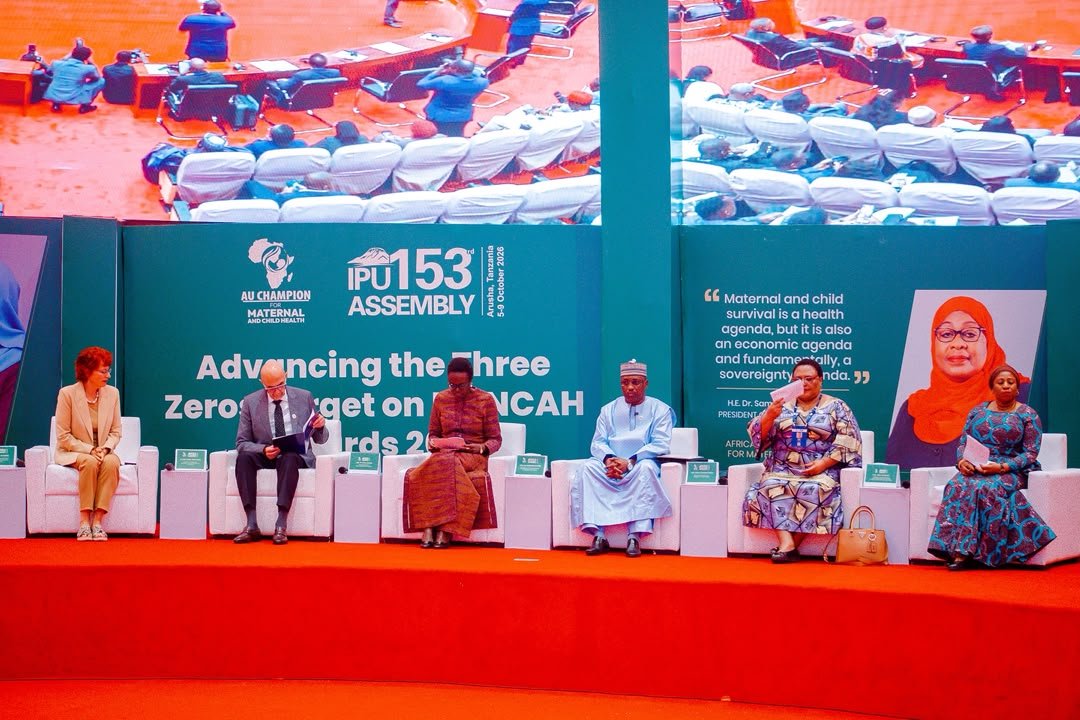
The African Union’s Three Zeros Agenda has become a major focus on the sidelines of the 153rd Inter-Parliamentary Union (IPU) Assembly in Arusha, Tanzania, where African lawmakers are being urged to translate political commitments on maternal, newborn and child health into practical action.
The IPU Assembly is taking place from October 5 to 9 at the Arusha International Conference Centre under the theme “Enhancing good governance and empowering communities through inclusivity, trust and opportunities for all.”

The Three Zeros initiative aims to achieve zero preventable maternal and newborn deaths, zero unvaccinated children and zero home deliveries without skilled care.

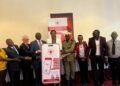
The issue was discussed during a high-level parliamentary meeting on women, children and adolescent health, attended by lawmakers, health professionals and development partners. The meeting focused on ways African countries can accelerate efforts to reduce preventable deaths.
Tanzania’s National Assembly Speaker Mussa Azzan Zungu said parliamentarians have an important responsibility to ensure health commitments made at national, continental and international levels result in real improvements for communities.

He said this includes strengthening health-related laws, ensuring reliable financing and using parliamentary oversight to monitor government programmes.
Zungu also called for health funding and services to reach communities and health facilities where they are most needed. He urged governments to give greater attention to maternal and newborn care, sexual and reproductive health, nutrition and adolescent health.
The need for faster progress was also highlighted by Ummy Mwalimu, Presidential Adviser on Reproductive and Maternal Health, who represented Tanzanian President Samia Suluhu Hassan at the meeting.
Mwalimu said Africa has reduced maternal mortality over the years, but progress remains insufficient to achieve international targets.
According to her, maternal mortality across African Union member states fell by 42% between 2000 and 2023. Despite this improvement, Africa still accounts for approximately 70% of maternal deaths worldwide.
She warned that if the current pace continues, the continent may not achieve the Sustainable Development Goal target of 70 maternal deaths per 100,000 live births until around 2050.
Mwalimu said many of the measures needed to prevent maternal and child deaths are already known. The major challenge, she noted, is ensuring those interventions are supported by adequate funding, effective health systems and measurable results.
She also pointed to President Samia’s position as African Union Champion for Maternal and Child Health, saying her roadmap is intended to accelerate progress in reproductive, maternal, newborn, child and adolescent health across Africa.
At the meeting, speakers stressed that parliamentary responsibility extends beyond passing legislation. Lawmakers must also ensure governments implement the policies and commitments supported by those laws.
Ali Kolotou Tchaïmi, Chair of the IPU African Geopolitical Group, said parliamentarians should ensure health commitments benefit ordinary citizens, especially vulnerable women and children.
He urged lawmakers to use their legislative, budgeting and oversight powers to encourage governments to improve healthcare delivery.
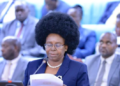
South African National Assembly Speaker Angela Thokozile Didiza also called for stronger political leadership, highlighting maternal deaths and childhood immunisation as continuing public health challenges.
She supported the Three Zeros agenda and said greater political commitment is required to reduce preventable deaths and address gaps in childhood vaccination.
Meanwhile, Professor Diana Nambatya Nsubuga, Africa CDC Head of Maternal, Newborn, Child and Adolescent Health and Sexual and Reproductive Health, said evidence from African Union countries indicates that many maternal and newborn deaths can be prevented.
She identified haemorrhage, hypertensive disorders during pregnancy and anaemia as major contributors to maternal deaths. Among newborns, prematurity and birth asphyxia remain significant causes of death.
Nambatya Nsubuga called for stronger accountability, improved quality of healthcare, timely reporting of maternal and newborn deaths and greater use of reliable data when designing and evaluating health interventions.
Dr Sunday Dominico, President of the Association of Gynaecologists and Obstetricians of Tanzania, said reducing maternal deaths also depends on health facilities having sufficient equipment, qualified personnel and dependable blood supplies.
Newborn health advocate Doris Mollel urged lawmakers to strengthen legislation and funding for premature and critically ill newborns.
She cited parliamentary measures in Tanzania, including action on parental leave and increased funding for newborn care, as examples of how legislative decisions can contribute to better health outcomes.
A representative from Botswana encouraged African countries to share successful approaches while tackling continuing maternal health challenges such as unsafe abortion, inadequate healthcare financing and limited access to services.
The discussions in Arusha highlighted the responsibility of African parliaments to transform health commitments into concrete budgets, policies, oversight systems and interventions whose impact can be measured through lives saved.
The need for urgent action remains substantial. WHO-linked reporting indicates that sub-Saharan Africa accounts for about 70% of maternal deaths globally, despite significant progress since 2000.
As African countries advance the Three Zeros agenda, the central challenge will be moving beyond political commitments and ensuring the initiative becomes a practical health programme that reaches women, newborns, children and families in communities across the continent.